For many organizations, storage is still something they have – not something they actively use to drive the business forward. At the same time, the demands are increasing dramatically: more data, more threats, higher availability, and less room for manual processes.
With FlashSystem.ai, IBM clearly shows where the market is heading. This is not just another upgrade of existing storage, but a fundamental shift in how storage is designed, used, and creates business value.
From LOAD’s perspective, this is interesting for one simple reason:
it addresses real problems that customers are struggling with today.
From storage systems to intelligent entirety
Traditional storage environments have grown organically. New systems have been added, older ones remain, and the result is often a complex environment with many dependencies and manual steps.
FlashSystem.ai instead introduces a grid-based approach, where multiple systems work together as an intelligent whole. Capacity and performance are shared across the environment and managed via policies rather than detailed configuration.
For the business, this means:
- Less time on “keeping the lights on”
- Fewer bottlenecks and over-dimensioning
- A more predictable delivery of IT services
This is an important step away from storage as a technical specialty – towards storage as a stable platform for business-critical services.
Agentic AI – automation that actually does the job
Many IT organizations already have automation, scripts, and playbooks. The problem is that they often require specialist knowledge, constant updating, and manual monitoring.
With FlashSystem.ai, IBM uses Agentic AI, which means AI that not only analyzes and suggests – but plans and executes actions independently, within clear boundaries.
In practice, this means that storage can:
- Provision and optimize based on business intent
- Adapt when conditions change
- Reduce dependence on individual knowledge
For many organizations, this is crucial, especially in an era where skills shortages are a reality. Automation must scale – not become another system to administer.
FlashCore Module 5 – when intelligence moves closer to the data
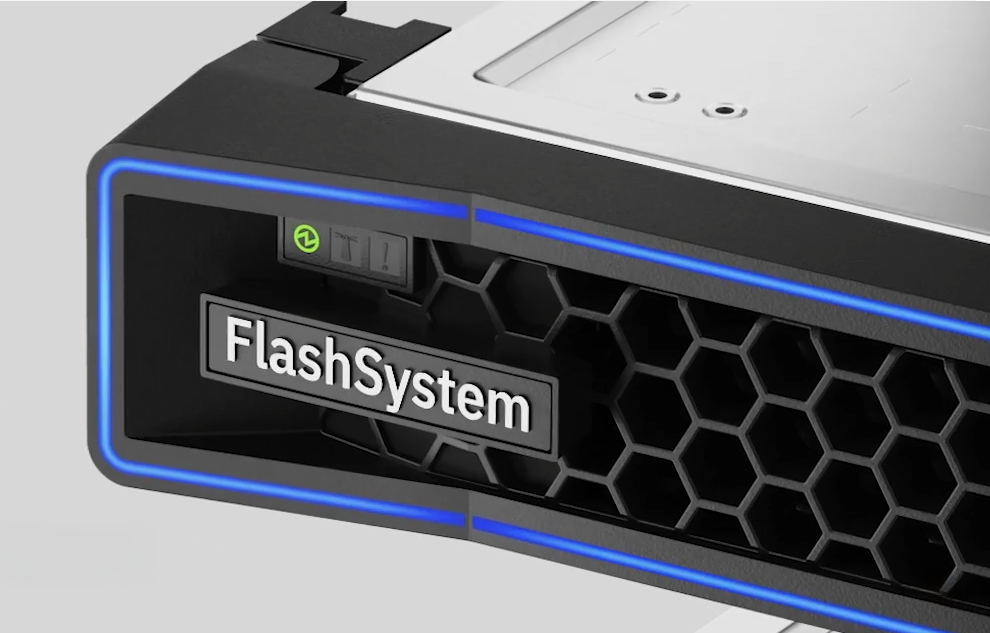
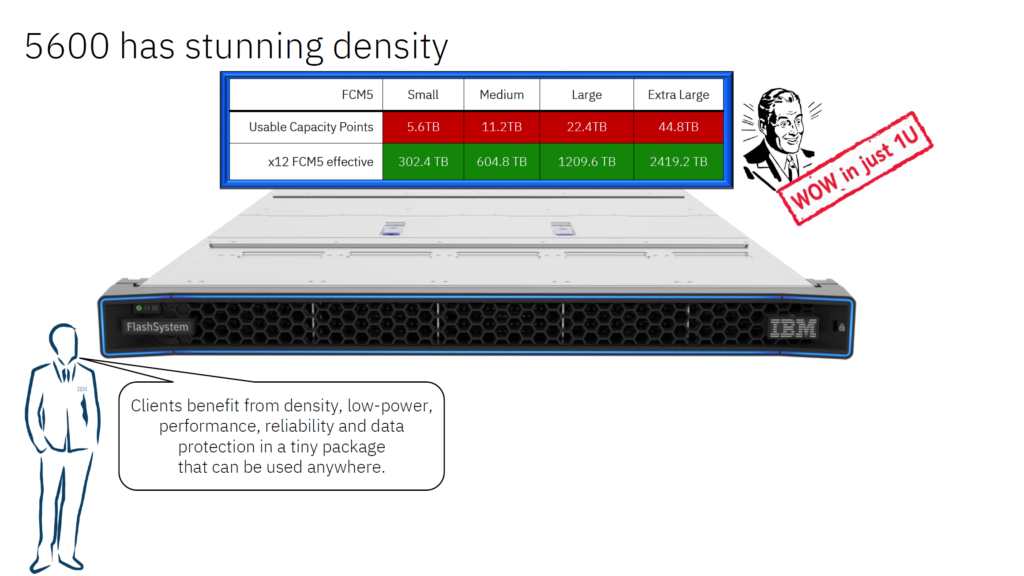
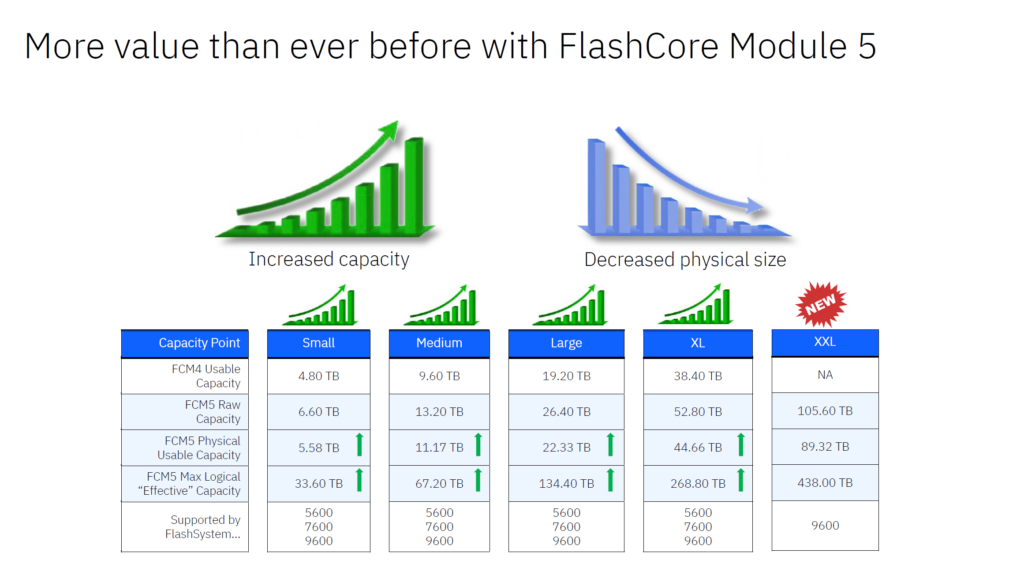
Another central part of FlashSystem.ai is FlashCore Module 5 (FCM5). Here, IBM has chosen a path that clearly differs from many other vendors: to move functionality and intelligence to the storage medium itself.
Compression, deduplication, encryption, and threat detection occur directly in the flash module, instead of in the controller layer. The effect is concrete:
- High and stable performance even with all functions active
- Better capacity density and energy efficiency
- Lower overall complexity in the design
This is a good example of how technical architecture choices directly affect business outcomes – in terms of cost, sustainability, and operational reliability.
Cyber-resilience as part of the design
A recurring question we encounter with customers is:
“How quickly can we be back – for real – if something happens?”
In FlashSystem.ai, cyber-resilience is not a separate addition, but an integrated part of the platform. Early threat detection at the I/O level, immutable snapshots, and secure recovery points make storage an active part of the security strategy.
It reduces both risk and uncertainty – two factors that often slow down digital development.
Why this is important – from a business perspective
What makes FlashSystem.ai interesting from LOAD’s perspective is not individual functions, but the entirety:
- Less manual operation
- More predictable delivery
- A platform that adapts when the business changes
IBM shows here that storage is no longer just about performance and capacity, but about how IT can support the business with stability, pace, and control.
For organizations that want to modernize their infrastructure without increasing complexity, this is a clear step in the right direction.
Do you want to discuss what this means in practice for your environment – and if it is the right way forward?
LOAD is happy to help translate technology into business decisions.